
Vecna Was Too Far Gone. Leaders Aren’t.
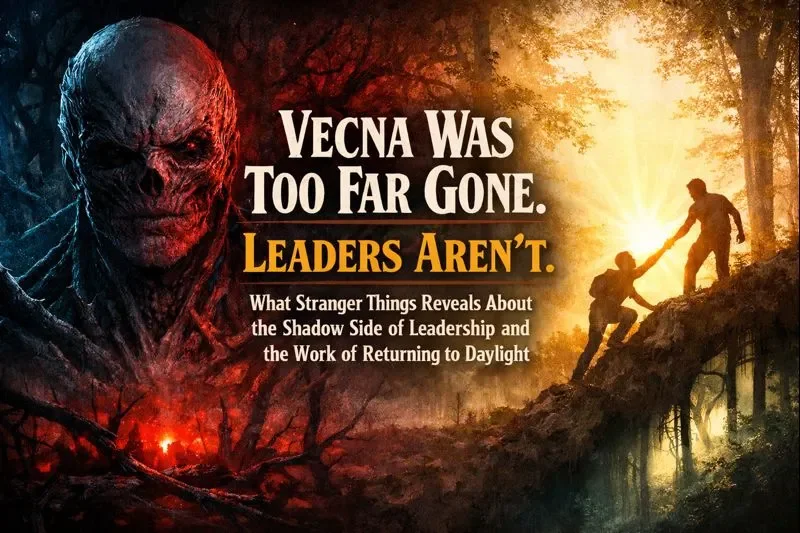
In a recent interview, The Duffer Brothers shared something quietly unsettling. As they looked toward the end of Stranger Things, they considered whether Vecna deserved a redemption arc. They talked it through. They explored it. And then they walked away from it.
Their conclusion was simple and heavy: Vecna was too far gone.
That decision makes sense in the world of the show. Vecna, once Henry Creel, didn’t just stumble into darkness. He nurtured it. Fed it. Let it define him. The Upside Down didn’t just corrupt him; it became home. At some point, redemption would have rung false. The damage was too intentional. The harm too deep.
And yet, when I heard that interview, my mind didn’t stay in Hawkins. It went straight to leadership.
I’ve met many leaders who quietly believe the same about themselves. They don’t say it out loud. They just live it. They think things like: “I’ve messed up too many times.” Or, “I’ve become someone I don’t recognize.” Or even, “I’ve been in this place so long I don’t know how to get back.”
They feel lost in their own version of the Upside Down.
That’s where the distinction matters.
Vecna chose the darkness and refused help. Leaders don’t have to.
In my forthcoming book, The Upside Down Leader, I explore the shadow side of leadership. The parts of us shaped by fear, ego, insecurity, pride, or past wounds. The parts that, left unchecked, can quietly run the show. That shadow doesn’t make you evil. It makes you human. But ignoring it can pull you further underground than you ever intended to go.
Here’s the difference between a villain and a leader who finds their way back.
Leaders can name their darkness. Leaders can accept help. Leaders can choose Daylight.
Daylight leadership doesn’t pretend the shadow isn’t there. It doesn’t rush to redemption without responsibility. It does the slower, harder work of honesty. It asks, “How did I get here?” and “Who do I need to walk with me out of this?”
I don’t believe anyone is ever too far gone.
I believe people get isolated. I believe they get defensive. I believe they stop asking for help and start believing their worst moments are their truest ones. That’s not villainy. That’s exhaustion.
And the way back isn’t dramatic. It’s relational and reflective. It’s vulnerable. It’s letting someone else hold the flashlight when you can’t see the path forward anymore.
Vecna didn’t want that. Leaders still can.
If you feel like you’ve drifted into the Upside Down, hear this clearly: Daylight is still there. But it requires movement. It requires naming what’s been unnamed. It requires letting others pull you toward the light when your own strength isn’t enough.
Call to action: Take five quiet minutes this week and ask yourself one honest question: What part of my leadership have I been avoiding looking at? Then do the braver thing. Share that answer with someone you trust. That’s how the journey back to Daylight begins.